What I do
I run CHS Intl, an engineering consultancy working in two areas that turn out to be one: numerical simulation, and the compliance work that has to be defended with numbers.
- Structural analysis — stress, stiffness, buckling, fatigue and contact behaviour; the recurring work.
- CFD — flow, heat transfer, pressure drop and mixing, with the mesh independence study documented rather than asserted.
- Acoustics and NVH — sound radiation, modal behaviour and vibration transfer paths.
- ATEX compliance — hazardous area classification, equipment selection and marking, and the documentation behind the assessment.
- PED compliance — conformity assessment routes and design-by-analysis work for pressure equipment.
The academic background is a PhD in computational fluid dynamics, and the professional background is over twenty years of applied simulation work — including simulation and compliance projects for more than a hundred customers worldwide. The habit that survived both is the same: state the assumption, test the model, quantify the difference, and write down where the answer stops being valid.
Why I write these articles
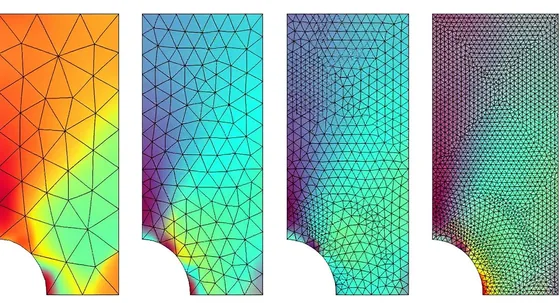
The guides on this site exist because the same questions arrive by email in slightly different words. They cover the subjects where a wrong assumption quietly invalidates the result: how a mesh independence study is actually run, how to read an equipment marking, what a correlation between simulation and test data does and does not prove, and when design by analysis is the right route under the Pressure Equipment Directive.
They are written to be checkable — standards named, numbers given, and the limits of the claim stated — rather than to be persuasive.
Articles
- ATEX zone classification explained — the six zones, equipment categories and EPL, gas and dust groups, temperature classes.
- CFD mesh independence studies — why they matter, and how to run one that holds up.
- FEA vs physical testing — when each is the right tool, and how to correlate the two.
- Design by analysis vs design by formula — when DbA is the right choice under the PED.
Three reference tools came out of the same work, and all three run in the browser with no account: the mesh independence calculator (order of convergence, Richardson extrapolation, GCI), the FEA test correlation checker (predicted versus measured per quantity), and the ATEX marking decoder for reading an equipment nameplate token by token.
Contact
For simulation or compliance work — or a correction to anything written here, which is welcome — the address below reaches me directly.