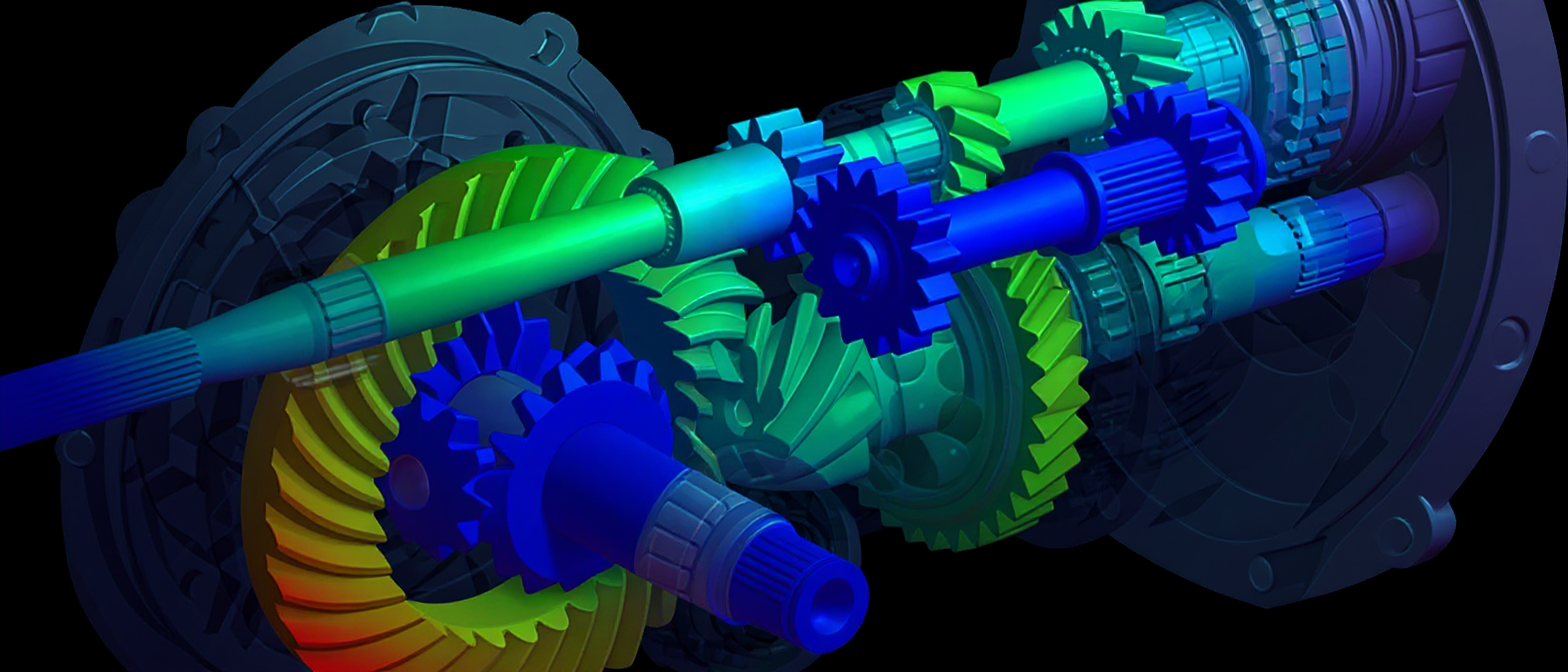
Simulation-Driven Optimisation
Engineering design optimisation uses mathematical algorithms — guided by simulation results — to systematically search the design space and find configurations that best meet your objectives: minimum mass, maximum stiffness, lowest noise, or highest fatigue life, subject to geometric, manufacturing, and regulatory constraints.
At CHS Intl, we apply optimisation across structural, fluid, thermal, and acoustic disciplines. Whether you need a topology-optimised bracket or a fully parameterised DOE study across hundreds of design variants, we deliver actionable outcomes rather than just raw data. In an era of rising material costs and aggressive lightweight targets — particularly in aerospace, automotive, and energy — simulation-driven optimisation is one of the highest-return investments a product development team can make.
Our Optimisation Capabilities
- Topology optimisation (material distribution)
- Shape optimisation (boundary morphing)
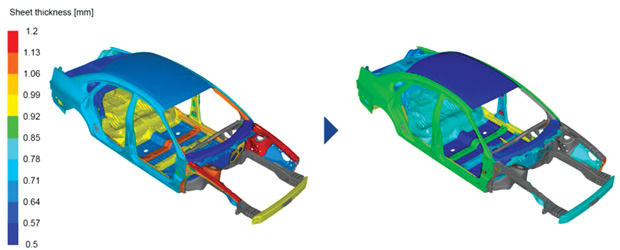
- Size optimisation (thickness, cross-section)
- Design of Experiments (DOE)
- Response Surface Modelling (RSM)
- Sensitivity analysis & gradient methods
- Multi-objective optimisation (Pareto front)
- Robust design / reliability-based optimisation
- Lattice & additive-manufacturing-ready optimisation
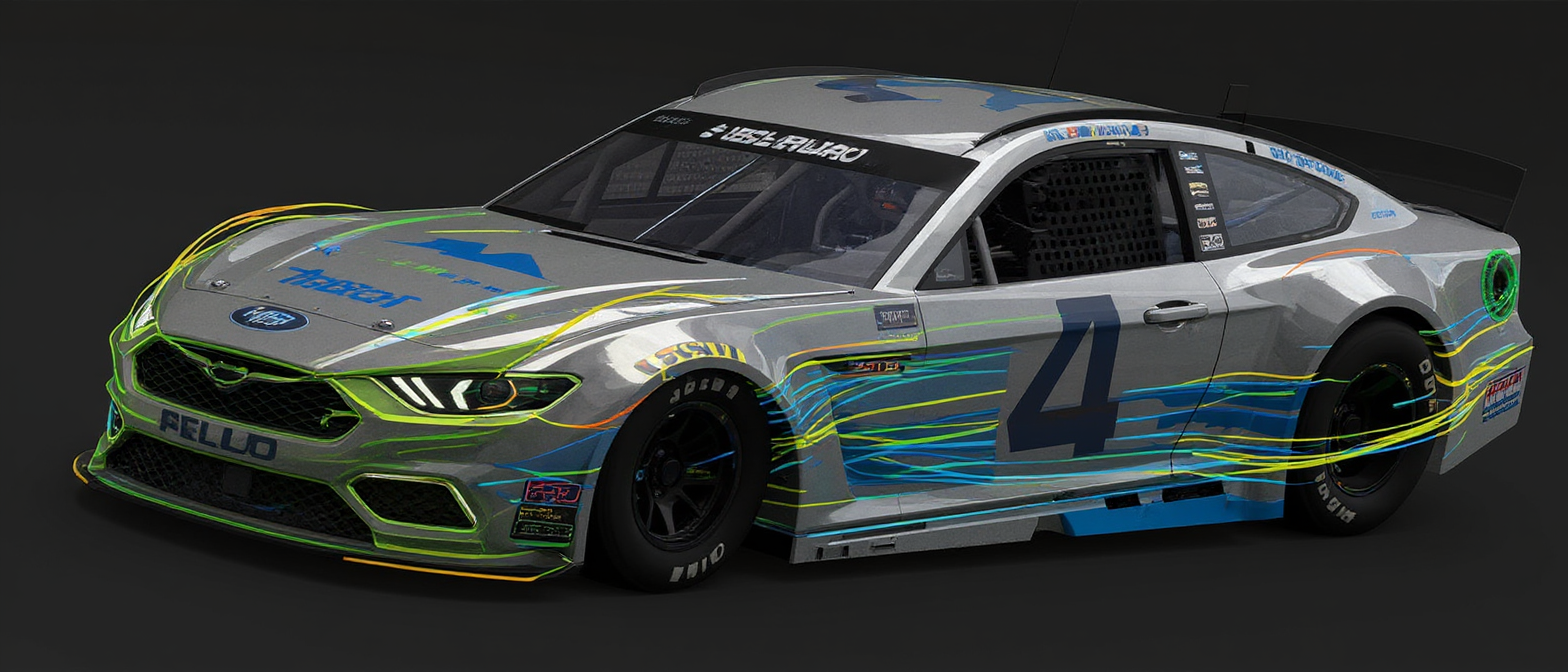
- CFD shape optimisation (aerodynamic / thermal)
- Material selection optimisation
- Manufacturing constraint integration
Software We Use
- Altair OptiStruct
- ANSYS Workbench
- HEEDS MDO
- Altair HyperStudy
- COMSOL Optimisation
Industry Applications
Our Optimisation Process
-
Objective & Constraint Definition — We identify what you want to minimise or maximise (mass, stress, frequency, drag) and establish the design variables and hard constraints.
-
Baseline Simulation — A reference FEA or CFD model is built and validated to provide the starting-point performance metrics.
-
Design Space Setup — Optimisable regions are defined (for topology) or parametric variables are set up with their bounds and step sizes.
-
Optimisation Run — The chosen algorithm (SIMP, gradient, genetic algorithm, surrogate) iterates through design candidates, guided by simulation feedback.
-
Design Interpretation & CAD Reconstruction — Topology results are interpreted and translated into manufacturable geometry; parametric results are mapped to CAD parameters.
-
Verification & Report — The optimised design is validated in a final full-fidelity simulation and delivered with a report comparing baseline and optimised performance.
Example Outcome
An aerospace sub-contractor needed to reduce the mass of a titanium hydraulic system bracket to meet a revised weight budget on a regional aircraft programme. The existing machined bracket weighed 2.4 kg. CHS Intl set up a topology optimisation study in Altair OptiStruct using three critical load cases from the aircraft structural certification requirements, with additive manufacturing overhang and minimum member size constraints to ensure printability. The optimised geometry was interpreted into a smooth, manufacturable form and verified in a confirmatory FEA run against all certification load cases with positive margins of safety.
2.4 kg reduced to 0.87 kg — 63% mass saving, all certification margins maintainedWhy Optimise with Simulation?
Manual design iteration is slow and biased by engineering intuition. Simulation-driven optimisation explores thousands of design candidates systematically, often finding solutions that no human designer would consider — lighter structures, quieter components, or more efficient thermal paths — while remaining fully within your manufacturing and regulatory constraints.
Frequently Asked Questions
What is topology optimisation and how does it work?
Topology optimisation is a mathematical method that determines the optimal distribution of material within a defined design space, subject to loads, boundary conditions, and manufacturing constraints. Starting from a solid block of material, the algorithm (typically SIMP — Solid Isotropic Material with Penalisation) iteratively removes material from regions that contribute little to structural performance, converging on an organic, load-path-efficient geometry. The result typically reduces component mass by 20–40% while maintaining or improving stiffness and strength.
What is Design of Experiments (DOE) and why is it useful?
Design of Experiments is a structured approach to exploring how multiple input parameters (e.g. wall thickness, fillet radius, material grade) affect one or more output responses (e.g. mass, maximum stress, natural frequency). Rather than varying one parameter at a time — which is slow and misses interaction effects — DOE uses statistical sampling plans (Latin Hypercube, full factorial, Box-Behnken) to efficiently map the design space with the minimum number of simulations. The result is a Response Surface Model that can be interrogated in seconds to find optimal combinations.
What manufacturing constraints can be included in topology optimisation?
Modern optimisation solvers support a range of manufacturing constraints that ensure the resulting geometry is producible. For casting and forging: draw direction and minimum member size constraints prevent undercuts and thin walls. For milling: tool accessibility constraints ensure all surfaces can be machined. For additive manufacturing (3D printing): overhang angle constraints prevent unsupported structures. Symmetry constraints can also be applied when mirrored or rotationally periodic designs are required. CHS Intl always discusses manufacturing intent before setting up the optimisation.
How does multi-objective optimisation work?
Many engineering problems have competing objectives — for example, minimising mass while also maximising fatigue life, or reducing drag while maintaining downforce. Multi-objective optimisation explores these trade-offs simultaneously, producing a Pareto front: a curve of optimal solutions where improving one objective necessarily worsens another. Engineers can then select the design point on the Pareto front that best matches their project priorities — for instance, accepting 5% more mass to gain 30% more fatigue life. CHS Intl presents Pareto front results visually to support informed design decisions.
Can optimisation be applied to existing designs, or only new ones?
Both. For new designs, topology optimisation is applied to the full design space from the outset. For existing designs, shape and size optimisation can improve a current geometry by morphing surfaces or adjusting parametric dimensions within defined bounds — without changing the overall architecture. This is particularly effective for reducing mass of established components, improving fatigue life at stress concentrations, or tuning natural frequencies away from excitation ranges.
What is the typical mass saving achievable with topology optimisation?
Mass savings of 20–40% versus a conventionally designed baseline are typical for structural components with a well-defined design space. Aerospace brackets optimised for additive manufacturing have achieved reductions exceeding 60% in some published case studies. The actual saving depends strongly on how conservative the original design was, the number of load cases that must be satisfied simultaneously, and the manufacturing constraints applied. CHS Intl provides a conservative estimate at project scoping based on the component type and load environment.